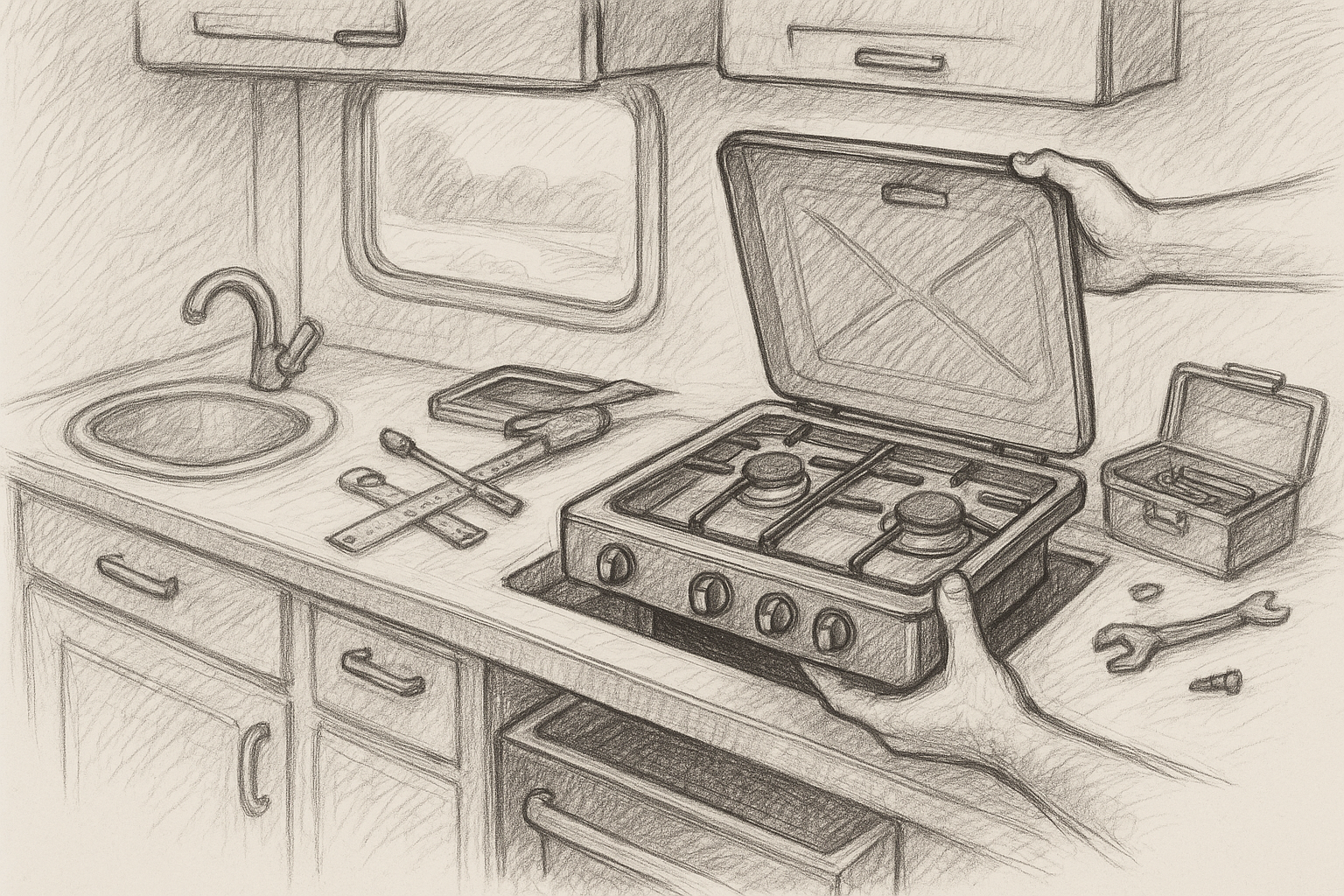
RV Cooktop Replacement: How to Upgrade Your Tiny Kitchen Without the Headache
Nothing brings a road trip to a screeching halt like discovering your RV cooktop has finally kicked the bucket. Whether you’re dealing with uneven flames, cracked burners, or a unit that simply won’t ignite, finding the right RV cooktop replacement is simpler than you might think. In this guide, we’ll walk through the key steps—measurements, fuel type, installation tips, and budget considerations—to get you cooking again in no time.
Ready to compare propane, induction, and combo units side-by-side? Check out our full lineup in the Ovens, Stoves & Cooktops collection.
1. Know Your Measurements Before You Buy
Step one sounds obvious, but it’s often overlooked: measure everything. Grab a tape measure and note the cut-out width, depth, and height of your existing cooktop. Modern RVs tend to use standard 17-inch or 21-inch widths, yet older rigs can vary dramatically. These numbers will guide you toward a drop-in unit that slides right into place without extra cabinetry work.
2. Choose Your Fuel: Propane vs. Induction
- Propane Cooktops – The classic choice for boondocking. Propane delivers instant flame control and works off-grid, but you’ll need proper ventilation.
- Induction Cooktops – Perfect for campsites with shore power or travelers with a robust solar setup. They heat faster, stay cooler to the touch, and are easier to clean. Just remember: you’ll need magnetic cookware.
- Hybrid Units – Some RVers swear by a combo of propane burners plus an electric hot plate. This setup gives you flexibility when campground power is available.
3. Prioritize Safety Features
Look for auto-shutoff sensors, flame-failure protection, and sealed burners that prevent debris from clogging the system. Newer models also come with child-lock touch panels—handy if you travel with kids or curious pets.
4. Don’t Forget Replacement Parts
If you already own a Greystone oven and only need specific components, sometimes a small swap saves big money. For instance, a black burner control knob for Greystone CF-RV17 & CF-RV21 models can fix a sticky dial issue in seconds. Likewise, upgrading to a complete 21.5" x 11.5" door assembly for the CF-RV17 oven revives heat retention and reduces preheat times.
5. DIY vs. Professional Installation
Installing a drop-in cooktop is easier than swapping a full oven, but you’ll still handle gas lines or high-voltage wiring. If you’re comfortable with basic plumbing and have a gas-leak detector on hand, a DIY swap usually takes under an hour. Otherwise, budget an extra $150–$250 for a certified RV technician.
6. Maintenance Tips to Extend Lifespan
- Clean spills immediately with a non-abrasive pad.
- Check burner ports for clogs every month.
- Inspect the propane hose and regulator annually for cracks.
- Store your rig level to prevent glass cooktops from flexing and cracking.
Top Signs It’s Time to Replace Your RV Cooktop
If you’re on the fence, watch for these red flags:
- Burners ignite but won’t stay lit
- Visible rust or corrosion around the manifold
- Cracked glass surface or warped grates
- Cooking times suddenly increase
- Gas odor even when knobs are off (shut the valve immediately!)
Cost Breakdown
Entry-level propane models start around $250, while premium induction units can exceed $800. Expect to spend another $30–$50 on a gasket kit and sealant. If you only need parts, individual components—like knobs and door assemblies—run much less and often ship same-day.
Wrapping Up
Swapping out your old cooktop for a new model reinvigorates your entire galley. Measure twice, select the right fuel type, and don’t skimp on safety features. Early attention to worn parts—such as control knobs and door seals—can postpone full replacements and keep your culinary adventures rolling.
Eager to compare specs or upgrade today? Browse our full Ovens, Stoves & Cooktops collection for the latest deals.
Frequently Asked Questions About RV Cooktop Replacement
- How do I know if a cooktop will fit my RV cut-out?
- Match the manufacturer’s cut-out specs (not overall dimensions) to your existing opening. If you’re between sizes, most RV cabinets can handle a 1/4" trim adjustment.
- Can I install an induction cooktop in place of a propane unit?
- Yes, but you’ll need adequate electrical supply—usually a dedicated 15-amp circuit—and you should cap off or remove any unused gas lines.
- Are replacement knobs and door assemblies hard to find?
- No. Parts like Greystone black burner knobs and a complete CF-RV17 door assembly are stocked year-round and ship quickly.
- Do I need to reseal the countertop after replacing my cooktop?
- Absolutely. Use a high-temperature RV-grade sealant around the perimeter to prevent moisture intrusion and rattling during travel.
- How often should I service my new cooktop?
- Perform a basic cleaning after every trip and a full inspection—burner ports, gas hose, and ignition—every six months.